The Future of Waste Management: How Will We Turn Trash Into Treasure?

< Back to Resources

In the world of waste management, the future’s looking bright. We are starting to see a shift in the way we think about trash, and people are beginning to realize the value of waste. There is a lot of talk about turning trash into treasure and there are many ways we can do this. By 2025, the waste management industry is expected to change dramatically. 

In this blog post, we’ll learn what effect waste has on our health and economy; and how cutting the waste we produce will help the environment. We’ll also look at what social impact waste has on people, and what sustainable ways to manage our waste, we should explore. Most importantly, we’re going to discuss how we can turn garbage into valuable resources. 

Let’s dive right in!

How Big of an Issue Is Waste?

As the world becomes more populated, the amount of waste we produce is increasing at an alarming rate. In 2016, the world produced around 2 billion tons of waste. This number is expected to increase to 3 billion tons by 2025! 

The ever-growing global population is inevitably driving the increase in the waste we produce. Our capacity to handle and properly dispose of waste, however, is struggling to catch up. The current system of waste management is not adequate to sustainably manage the amount of waste we produce. The majority of our waste (roughly 140 million tons each year) ends up in landfills, polluting the soil, air, and water. 

Waste also has a deep social impact on people. It creates inequality, as around the world, the US included, people are struggling to get enough food daily. This creates a devastating paradox, where 1.3 billion tons of food a year are just thrown away, and yet, some people do not have enough of it on a daily basis. 

The social issue with waste is further exacerbated by the fact that wealthier countries export most of their waste to developing countries, leaving those with less to deal with the immediate environmental and health issues garbage creates. 

How Is Waste Affecting the Environment?

The environmental impact of waste is huge. It takes a lot of energy and resources to manage all this waste, and this harms the environment. Landfills are a major source of greenhouse gas emissions, and they also take up valuable land that could be used for other purposes.

Incinerating or burning waste is another way to get rid of it, but this also harms the environment. Burning waste releases harmful toxins into the air, which damages the ozone layer and disrupts the normal functioning of ecosystems, resulting in the depleting population of vital animal and plant species that play important roles in the balance of life. 

How Is Waste Affecting Our Health?

As the amount of waste we produce increases, so does the risk to our health. Waste can contain harmful chemicals and toxins that can cause serious health problems. 

The pollution caused by landfill and waste incineration has been linked to several health issues and serious illnesses like asthma, cardiovascular disease, cancer, and birth defects. 

Furthermore, waste attracts vermin and insects that spread infections and diseases, adding to the list of issues trash and especially food waste creates for our health. 

How Is Waste Affecting the Economy?

Waste and its mishandling are also creating huge economical problems. The economical loss in food being thrown away is around a trillion dollars. Waste is a huge burden on the global economy. With each food item thrown away, we lose copious amounts of labor, energy, and land resources. All the effort in the production, distribution and consumption phases is lost as well.

The accumulation of solid waste is a ticking environmental bomb that is harmful to the environment and our health, and it also costs the economy billions of dollars every year. 

Future-Proof Ways to Resolve Waste Issues

There are many other sustainable practices that we can follow to manage our waste more sustainably. These include reducing our consumption, reusing materials, and repairing items instead of throwing them away. By following these sustainable practices, we can make a big difference in the amount of waste we produce and the impact it has on the environment.

Here are a few more ideas that experts say will help us re-think, re-shape, and transform the ways we handle trash in the future. 

1. Re-Imagining Production Cycles

The first thing we should all do when trying to find sustainable and future-proofed waste management processes is to look at the current system. Today our disposal model is primarily linear. We produce, we use and throw away. This method, however, creates an ever-growing problem that needs immediate addressing. 

We should change the way we look at waste, and try to incorporate circular models of production and consumption. Waste needs to be included in an economic system that brings a harmonious, never-ending cycle of production, use, and recycling. 

Waste we produce at home and in the office is a valuable commodity that can help us build a circular consumption model, where nothing goes to waste and no garbage contaminates our ocean, air, and ultimately our food. 

Investing in clean reprocessing technology, biodegradable packaging, and socially responsible food management practices on a local scale is a good way we can take hold of the impact we have on the environment and our health.

2. Investing in Waste-to-Energy Technologies

The global waste-to-energy market has grown tremendously over the past few years. It’s estimated that up to 300 million tons of garbage can be burned in energy plants and used for power generation. 

The thermal subsection of the waste-to-energy sector is expected to grow to revenue of $48M by 2028, creating a huge economic potential for those who decide to develop there. Turning our waste into a viable energy resource that helps us fight the constant accumulation of garbage at our landfills and incineration is one way that seems to be working well so far. 

The sector nevertheless has to see its transformation. A new business model that accounts for the negative effect of current waste-to-energy processes. Even if these incineration facilities cut significantly the greenhouse emissions produced by traditional fossil fuel energy generating plants (up to 95%), they still produce some amounts of harmful gasses. 

One way we can solve the emissions issue is by looking at other types of technologies that ensure a more sustainable cycle of energy production. Biological technologies could prove to be the breakthrough we need. 

Technologies like biodegradable feedstock, or using microorganisms to convert carbon-rich waste into biofuel via a gas fermentation technology are just two instances of how biotech can help us find more efficient and eco-friendly waste management solutions. 

A real-life example of biotech turning waste into resources is that of Novozymes, a Danish biotech firm, and their product – Eversa. Eversa is an enzyme-based solution that converts used cooking oil or other lower-grade oils into biodiesel. 

3. Ramping Up Recycling 

Recycling has been hyped up for years now. We all understand its importance and immense potential in cutting down waste going to landfills and oceans. 

But while materials like paper and metals used in electronics are relatively easy to recycle, complex plastics are not. The more sophisticated the plastics we use get the harder it is to break them down and re-use them. Specialty plastics like carbon fiber for instance are notoriously hard to recycle, requiring a lot of additional resources and ramped-up costs. 

Innovative technologies that sort through plastics and separate recycling materials quickly and efficiently are needed to get these often one-time-use plastics back into the production loop. Processes like robot sorting, x-ray, near-infra-red sorting, and laser-induced breakdown, might offer the answer to our growing plastic waste problem. 

Companies that complement the sorting and recycling processes are also important contributors to solving the low-rates recycling issue. Manufacturers like – Clariant, a global company that specializes in plastics colorants, that are easy to detect by sorting machines, for example, help increase recycling rates. 

To Sum It Up 

There is no doubt that waste management is a critical issue for our planet. The way we manage waste today will have a significant impact on the environment and human health in the future. If we want to turn trash into treasure, we need to start looking at waste management in a new way. 

Sustainability should be our main focus when setting policies and finding practical ways of turning waste into a renewable resource for industries. These future-proofed waste management practices should give us the basis on which to step when building a greener future for ourselves.

E-Waste — The Bain of Our Technological Society

< Back to Resources

Picture this, just in 2021the United States has generated over 50 million metric tons of e-waste. That’s not the total amount of waste, that’s just electronic waste. The amount of discarded computers, printers, home appliances, and medical devices that we throw out annually is equal to the weight of 350,000 Statues of Liberty. 

What’s even more concerning is that most of the e-waste and its upcycling potential is lost. Most of the electronic waste is either incinerated or placed in landfills, not only adding to the issue of depleting finite resources but causing pollution and hazards for our health. 

So let’s look at what e-waste is, how big of a problem it is, and what we can do to manage e-waste more effectively and sustainably. 

What Is e-Waste?

E-waste is the electronic product we discard after its useful life has ended (and occasionally when it’s not as modern as we desire). This waste category encompasses all possible electrically-charged appliances and devices, along with the peripheral and auxiliary equipment that help them run (computer mice, chargers, keyboards, etc.) 

E-waste is predominantly made of plastic and metal but also can include some heavy metal elements such as printed circuit boards, or others like refrigerants in fridges and air conditioners. Both the heavy metals and the cooling chemicals have significant harmful effects on the environment when not disposed of properly. 

More on that later. Let’s look at what other categories e-waste can fall under. 

Types of e-Waste 

In the United States, the governmental body that classifies, regulates, and aids businesses and private citizens with their e-waste disposal is the Environmental Protection Agency (EPA). According to EPA, electronic waste can be any of the following: 

  • Large household appliances

These can be, for example, refrigerators, air conditioners, washing machines, and others.

  • Small household appliances

They can be microwaves, rice cookers, electric kettles, food processors and blenders, toaster ovens, vacuum cleaners, and more.

  • IT equipment, including monitors or Infocomm technology (ICT) equipment

These include laptops, tablets, desktop computers, mobile phones, printers, modems, monitors, keyboards, computer mice, docking stations, hard disk drives, batteries and chargers, and more.

  • Consumer electronics, including televisions
  • Lamps and luminaires
  • Toys
  • Tools 

Like drills, eclectic hammers, and other DIY or construction equipment

  • Medical devices
  • Monitoring and controlling instruments
  • Automatic dispensers

How Is e-Waste Affecting the Environment & the Economy?

There will be over 347 million tons of unrecycled e-waste, globally in 2022. E-waste is the fastest-growing waste stream on the planet. Its harmful effects are very impactful due to our fast-paced technological development, the heightened market competitiveness, the affordability of various IT products and smart home appliances, and also the shortened lifespan of some electronic devices. 

The problem with e-waste is further exacerbated by the growth of the world population and the improved economic prosperity, that is reaching more people. All these factors drive the accumulation of e-waste upwards with unprecedented acceleration, urging us to look at the issue closely. 

What are the effects of the rapid growth of e-waste? 

Let’s look at what the data is showing. 

As reported by the Green Citizen a single computer screen contains somewhere between 5 and 8 pounds of lead. Currently, 40% of the lead found in our landfills comes from electronic devices. And that is just one type of e-waste element that contains heavy metal. 

With lead being one of the most harmful toxins for the human body, it’s frightening how much of it is left untreated or incinerated at garbage management sites, leading to leaks into our atmosphere, soil, and water resources. 

The contamination with heavy metals (and lead is just one of them) ends up poisoning our atmosphere, sea life, land flora, and fauna. We’re not only directly threatening the well-being of other life on the planet but contaminating our food and water sources. 

In addition to the serious health and environmental hazard, the lack of appropriate recycling processes for e-waste creates acute economic issues. 

Every electronic device simply laying in landfills is a waste of valuable resources. Many of our electronic devices contain scarce and precious metals that are needed for our continued technological development. 

As covered by the Guardian in 2019, e-waste contained copper, gold, silver, iron, and platinum, equivalent to $57 billion. Unfortunately, most of these metals were dumped or burned rather than recycled. 

Furthermore, the Globe and Mail, reports that the world’s precious metals e-waste recovery market will grow from $9.22 billion in 2021 to $9.61 billion in 2022. That’s a compound annual growth rate (CAGR) of 4.28%.

It’s abundantly clear that e-Waste poses a significant threat to our sustainable future and we need to actively engage in finding appropriate e-Waste management solutions that work in the long run. 

What Is E-waste Management?

E-waste management involves the processes of collecting, recovering, and recycling electronic equipment, devices, and appliances. Currently, in the United States, e-waste management practices involve domestic landfill dumping, international shipments of domestically produced e-waste, along with some recycling and reuse programs. The EPA estimates that in 2019, the United States disposed of roughly 7 million tons of e-waste. Only 15% of that waste was recycled. 

We need a complete change in the way we think about electronic devices that no longer serve us. Electronic devices are a valuable source of raw materials, most of which are hard to find and process. An outdated smartphone or computer can be the raw materials from which we produce new devices. 

Modern day e-waste management systems are heavily concerned with the safe methods of disposal of unfit units (their disassembly and destruction) as well as finding more sustainable methods of upcycling elements or entire constructions of electronic devices. And that makes e-Waste management a necessary discipline requiring a collective effort. 

Does e-Waste Get Recycled Actually?

Of the 13 million tons of e-waste produced last year in the USA, less than 2 million tons were recycled. It’s evident not enough of our discarded electronics are reused.

When done properly recycling can reduce the leakage of toxic materials into the environment and spare further spending on our depleting natural resources. The practice needs to be more widely adopted. 

But How Is E-Waste Recycled?

First, let’s look at some of the e-waste elements that can be recycled. There are several major e-waste recycling categories: 

  • Plastic
  • Metal
  • Glass
  • Mercury
  • Circuit Boards (containing metals like gold; silver; copper; palladium; 
  • Hard Disk
  • Toner and Ink Cartridges 
  • Batteries 

Once collected by a waste management company, the e-waste devices are disassembled in a safe human environment and each element is either recycled or further transported to a recycling facility specializing in the appropriate recycling category. 

Where Is E-Waste Recycled? 

Plastic and metal (plastic and aluminum elements from hard disks, toner, and ink cartridges ) from the e-waste are recycled in regular recycling facilities since they don’t require further processing to make them safe to handle. 

Glass elements, most of which are extracted from computer monitors and TVs contain several hazardous substances that require their recycling to be performed in specialized facilities, ensuring these components are safely disassembled and treated so none of the dangerous heavy metals end up in the environment. 

E-waste elements that contain mercury are recycled in facilities with technology that can eliminate it safely and turn it into products like dental amalgams, fluorescent lighting, and metric instruments. 

The circuit boards are upcycled in facilities that specialize in smelting materials like 

gold, silver, palladium, copper, tin, and other valuable metals.

Batteries are probably the most complicated and time-consuming to recycle. They require specialized recycling that recovers the nickel, cobalt, cadmium, and steel they contain to be used again in new batteries. Leaving batteries to decompose at landfills is dangerous-they should always be discarded and recycled. 

Now that we’ve covered what e-Waste is and how it needs to be recycled, let’s look at some of the best e-Waste management practices that will offer a sustainable future for our out-of-date electronics. 

Best E-Waste Management Practices

There is a certain relief in knowing that every piece of garbage we produce has a continued life once we discard it, e-Waste included. But making sure no battery goes in the same bin as your food scraps starts with personal responsibility and grows into a collective conscientiousness. 

While we keep pushing for more effective e-Waste management practices, let’s look at what some of the ideas of sustainable e-Waste recovery are, and what we can personally do to decrease our harmful contribution. 

Old but Gold 

In a fast-consuming world, we often get lost in the latest trends and technologies, forgetting that our old smartphone or laptop is still very much functional. What you can do is delay upgrading your products for as long as possible. If it isn’t broken, don’t change it. Your small compromise will minimize e-waste and any further adverse effects on the planet. 

Run in Circles

While this saying usually has a negative connotation, here it can mean something good. When purchasing any new electronic devices you can make sure you choose these products that are designed to be repaired, upgraded, and refurbished- living multiple lives and enabling a more circular economy. 

Pass the Torch

A third option you can consider when replacing your e-devices is a donation. Instead of adding to the e-Waste problem you can consider selling, or passing on your old but working electronic appliance to someone who might find it useful. Pass the torch, and decrease your impact on the environment. 

Do the Research

Lastly, you should learn more about the recycling practice of your local municipality or district. You might be very diligent with separating and categorizing your recycling, but not knowing where it goes once it leaves your home or office makes your efforts fruitless. Investigate how and where the components of your e-devices are recycled, and whether that is done safely and responsibly. 

On a Closing Note

The fast development of technology and our consumption-driven society create an acute e-waste problem. Currently, we produce way-more electronic devices than we’re able to recycle. That, unfortunately, leads to the accumulation of vast amounts of e-waste left to decompose at landfills and threaten our entire ecosystem. 

Recycling e-devices is a serious concern we’ve briefed through in this article, hoping to raise more awareness and prompt you to be an active participant in finding a sustainable solution.


e-Waste in New York. How to Recycle the Office Out-of-Order Electronics

< Back to Resources

Electronic devices are an inseparable part of the modern office. It’s near impossible to conduct business and perform daily work tasks without a laptop, printer, or projector. The use of electronic devices in the workplace, however, poses the question: “What happens to out-of-order electronic devices?

Like consumers, offices are required to recycle most of their electronic devices once no longer in use. All computers, peripherals, TVs, small-scale servers, and other small electronic equipment and supporting e-devices are included in the recycling list.

In New York, specifically, the Department of Environmental Conservation has established guidelines on what is considered e-waste, and how consumers and companies should recycle electronics. 

How much of the e-waste is actually recyclable?

Let’s look closer. But first… 

Why Is It Important to Recycle e-Waste?

Both working and broken items that are no longer in use can be considered e-waste. Left to decay in landfills or dusty storage rooms, these appliances become a threat to our health and environment.

Most of the e-devices – whether in consumers’ homes or business offices – have a complex structure that is put together with the help of some heavy metals. Although they can range greatly from device to device some of the compounds found in electronics are lead, mercury, cobalt, nickel, and even arsenic. If electronic equipment isn’t carefully disassembled and recycled, these metals can leak into the atmosphere, the soil, and water, and harm us and the rest of the species in our eco-systems.

Recycling e-waste is vital to preserving a clean environment, but it is also sparing us further mining for the metals used in the construction of electronics. This in turn decreases air pollution, the eroding of the soil, and the destruction of natural habitats. Recycling also solves the problem of depleting natural resources, ensuring our technological future is preserved. 

You may now understand why recycling is an important tool for keeping e-waste out of landfills and adding to the problems of pollution, you might even be ready to take steps in ensuring your office starts its e-waste recycling journey. And that’s great! Here are a few things to keep in mind. 

What Are the e-Waste Management & Disposal Rules in New York?

In the United States, the Environmental Protection Agency (EPA) is the institution providing stewardship on how e-waste should be disposed of and recycled around the country. Along with the EPA, each state has its own recycling programs and legislation. Currently, 25 states (plus the District of Columbia) have set specific rules on how households and enterprises should dispose of electronic waste. 

In the state of New York, The NY State Electronic Equipment Recycling and Reuse Act (Environmental Conservation Law, Article 27, Title 26) establishes the proper actions individuals and entities must take to ensure their e-waste is recycled in an environmentally-responsible manner. 

According to the act, consumers and businesses are obliged to recycle a great part of their electronic waste. Items like computers, computer peripherals, TVs, small-scale servers, and electronic equipment are subject to recycling regulations. Furthermore, the NY State Electronic Equipment Recycling and Reuse Act requires manufacturers of electronic devices to offer free and appropriate recycling services to most of the consumers in the state. 

Who Is Eligible For Receiving Free e-Waste Services? 

Eligible consumers according to the act are:

  • Individuals
  • Non-profit organizations / charities
  • Corporations with less than 50 full-time employees
  • Non-profit corporations with less than 75 full-time employees 
  • Non-profit corporations designated under section 501(c)(3) of the internal revenue code
  • Schools
  • Governmental entities located in NY

Who Is Not Eligible For Receiving Free e-Waste Services? 

There are some consumers who, according to the NY State Electronic Equipment Recycling and Reuse Act, are not eligible for free e-waste recycling services. Those are: 

  • Non-profit organizations with 50 or more employees
  • Non-profit corporations with 75 or more employees 

Along with the NY State Electronic Equipment Recycling and Reuse Act, there is the NY State Wireless Telephone Recycling Act (Environmental Conservation Law, Article 27, Title 23*2). This legislative act establishes that wireless telephone service providers are required to offer free reuse and recycling of up to 10 cell phones from any person or provide free shipping of those mobile phones to a recycling facility. 

How Is New York Disposing of Its e-Waste?

If you’re living in New York, you’re probably aware that some categories of your e-waste should not be thrown away but recycled. Devices that contain heavy metals and other chemicals fall under that category. These are usually marked as hazardous waste and labeled appropriately, so you know how to sort them. 

Individual Consumers

As an individual consumer, you can take advantage of several options when disposing of your e-waste. 

You can: 

  • Set a pick-up appointment if you live on Staten Island
  • Sign up your apartment building for pickups from the ecycleNYC program
  • Take it personally to a drop-off location
  • Send e-devices to the manufacturer or retailer for recycling
  • Donate the devices if in good working condition

Tenants should be aware that it’s their responsibility to discard electronics, and not their landlord’s.

Enterprises 

How should business offices handle their e-waste? 

As we’ve mentioned in the previous section, small businesses with less than 50 full-time employees, and nonprofits with fewer than 75 employees, can apply for free electronics recycling offered by manufacturers. The Department of Environmental Conservation provides a list of registered electronic equipment manufacturers for the convenience of users and businesses. 

Companies that don’t pass the employee number requirement can take advantage of two basic options for their e-waste recycling: 

  • Donate the working e-devices (to schools or charities, for example)
  • Contact an e-waste management company & arrange a pickup service

To ensure the responsible recycling of electronic devices with hazardous elements, businesses should look for companies with R2 certification or such with e-steward standard certification. The NY State Department of Environmental Conservation keeps an up-to-date list of registered electronic waste recycling facilities

For any electronic devices that do not contain any hazardous elements as per the NY State Department of Environmental Conservation, you can take care of the recycling yourself. 

Non-harmful e-devices can either be collected by a private waste management company or you can register your business as a self-hauler and remove it yourself. 

Apart from the legislative requirements, there is also an important recycling fact you should be aware of. 

That concerns the question of: 

How Much of the e-Waste Offices Produce Is Recyclable? 

In 2019, globally, 17,5% of e-Waste worldwide was recycled, and the rest ended up in landfills. In the United States alone, of the 13,1 million tons of e-waste generated in 2019, only 15% was recycled. 

Unfortunately, there aren’t clear indicators of how much of the e-waste produced in the States comes from businesses, but we can imagine that with the need for more electronic devices, comes a greater amount of e-waste. 

The tendency of e-waste to be left untreated is rising and with it, the concerns about the long-term effects of unrecycled e-devices. Experts are forecasting that the issue will only grow with the expansion of the latest technologies and the growth of the world’s population. 

What Is the Solution to a Growing e-Waste Problem? 

A shared vision (on how we should manage e-waste) among most recycling futurists is that of a circular economy. A model that circles products back into the economy, ensuring that no valuable resource is lost, or completely exhausted. 

You might be wondering if creating products that are 100% recyclable and can easily be returned to the production cycle are worth the investment. And you’ll be asking a valid question. 

Here’s the data. According to the United Nations, the current value of e-waste is over $62 billion per year. That’s $62.5 billion in value of the material alone. What happens with that value if e-waste is not recycled? It rots in our landfills. 

What the UN report says is that reusing resources from used electronics produces considerably less carbon-dioxide emissions than mining in the earth’s crust. The worth of e-waste is there, we only have to implement the right measures that help us harvest its potential. 

The Benefits of Circular Economy

In a circular economy, products are designed to serve us longer and when they reach the end of their usable life, they can be turned into valuable resources for the manufacture of new products. The ultimate goal? Materials are kept in use and reshaped over time, so no waste is produced. 

For the industries detailing with the production of e-devices that means that engineers should develop new strategies for designing new products that cover a few essential requirements like: 

  • Extended durability
  • Allowed upgradability
  • Ensured repairability
  • Guaranteed reusability

The IT industry, for example, could focus on building computer systems that can easily be taken apart and their vital components replaced. Instructions on repairs should also be more accessible and comprehensively explained. Another important feature such systems should have is the possibility of secure data deletion so the devices can be reused without any risk of data leakage. 

The effort to turn things around and become a more sustainable society with a better focus on long-term circular solutions is a matter of collective effort. The start, however, can be individual. 

Implementing company-wise e-waste policies that are aimed to preserve, upcycle and recycle as much of your office’s e-waste as possible gives you a competitive advantage and tells your customers that you’re invested in the sustainable well-being and future of our society. 

To Wrap Up

Sustainability & Waste Management | The Future of Trash

< Back to Resources

The development of our modern world comes with its many comforts. We build, produce and create products and services our ancestors couldn’t have even imagined, yet our progress comes at a cost. The price we have to pay is measured in the waste our industrial processes and everyday consumption produce. 

Waste management is a critical issue in the global economy, one that we’re still struggling to handle responsibly. The future of our planet and future generations lies in our hands. Sustainable waste management is a pressing issue we have to resolve as soon as possible. 

In this article, we’ll take a look at how we as a global society are preparing for the future of trash. But first, let’s start with the foundations. 

What Is Waste Management?


Waste management is the collection, transportation, and disposal of garbage, sewage, and other waste products. It involves the treatment of solid and liquid waste. It’s in the treatment phase that part of our trash can be recycled. The statistics on recycling, however, show that just a tiny fraction of the waste we produce is recycled. For example, only 5% to 6% of post-consumer plastics have been recycled in 2021.

How Much Waste Do We Produce?

The world generates more than 2 billion tons of waste per year. In another 28 years, the amount of waste is estimated to grow to 3.4 billion tons, an increase that needs addressing. Intertwining our economic systems into one harmonious recycling and reusing society, however, isn’t an easy task. Even more so, when the expected rise of world economies and population growth in lower to middle-income countries will affect the production and management of waste. 

By 2050, in the regions of Sub-Saharan Africa and South Asia, the total waste generation is expected to triple, accounting for 35% of the world’s waste. This will exacerbate the problem created by big consumer countries like the US, where each person produces almost 1800 lbs of waste annually. Looking for sustainable ways to manage our waste is a pressing challenge that we should take seriously. 

What Is Sustainability?

Sustainability is the practice of responsible consumption of natural resources so we prevent their depletion. It looks at methods of maintaining the ecological balance. In business terms, sustainability is reflected through the manufacturing of goods and services that do not damage the environment and in the best case can be returned back into the production cycle.

What is Sustainable Waste Management?

Sustainable waste management relates to the collection, transportation, and disposal of waste in ways that the environment is not jeopardized. The idea of sustainable waste management boils down to re-using trash as an essential resource, vital for households and businesses. 

Sustainable waste management is tasked with decreasing the use of precious natural resources – a massive undertaking that aims to focus our efforts on reusing responsibly what we’ve already manufactured. As part of the circular economy concept, a well-designed sustainable waste management system incorporates feedback loops, focuses on processes, and adaptability, and successfully diverts waste from dumping grounds. 

Sustainable waste management besides being good for the environment provides opportunities and benefits to society and the global economy. Responsible waste management can create jobs, and lessen the harmful impact of human activities hence, improving the air and water quality. Additionally, it decreases food wastage and lowers environmental costs. 

Legislative systems around the globe are already taking proper steps toward creating regulations that encourage businesses and people to reduce their waste, and take advantage of alternative energy sources, so together we can meet our growing demands in a sustainable way. Developing technologies offer practical solutions that can help us bring our waste into the future. 

One such technology is Waste to Energy (WTE). The idea of WTE is partially pushed by the rapid depletion of conventional energy sources but is also a solution to the increasing implementation of environmental policies, like the need to reduce carbon emissions.

Waste to Energy (WTE) Technology

Waste to Energy technology addresses processes that create energy like electricity, transport fuels, or heat from waste. There are several types of WTE. New resources can be generated from semi-solid waste (like sludge), liquid waste (like domestic sewage), and gaseous waste (like refinery gas).

Waste to energy is most commonly applied to the processing of municipal solid waste, where incinerating the trash collected by businesses and households produces heat and power in CHP plants. It’s an alternative that helps lower harmful emissions from landfills and it also recovers important and limited metals through recycling. 

Although current WTE technologies help us offset some of the impacts our waste has on the environment, there is still work to be done for us to transition to a fully sustainable waste management future. Here are a few ideas that will help us move forward. 

Smart Waste Management 

It all comes down to adjusting our processes and lives to a more conscientious manufacturing and consumerism. Two tasks that are easy in theory but far more complicated in practice.

Nonetheless, there are a few smart waste management solutions that might help us get there. 

Prioritizing Sustainable Materials 

Recycling is one way to reduce our carbon footprint, but it’s a process that also requires the consumption of energy instead of trying to figure out how we can responsibly recycle single-use plastics and other single-use materials. For example, we can start investing our time in learning about sustainable materials and manufacturing processes that help us make greener choices. Turning biodegradable single-use cutlery into compost that nurtures the land and helps us grow more food is a great alternative. 

Planning, Planning, Planning

Planning for waste management is probably not the most fun, as it calls for our concentrated effort to organize when and how to dispose of our trash. But it is an essential and repetitive task that should follow the entire process of returning what we’ve used back into the production cycle. This is a step that’s especially important to business owners who are fully dedicated to transforming their manufacturing methods and helping their consumers in the process. 

Strategic planning will help you offer sustainable improvements to local waste management practices and adjust to the ever-changing waste and recovered materials markets. In addition, brands that show their engagement with such an important issue are far more likely to not only keep but grow their client base. 

Public and Business Working Together 

Significant social changes are hard, and they can rarely be achieved single-handedly. Collaboration is key to every major decision that drives our development and sustainable waste management is not an exception. 

One approach that can help us achieve more in the field of responsible trash management is the Public-Private Partnerships for Service Delivery (PPPSD). PPPSD promotes self-supporting partnerships between different businesses and local governments. It’s a tool that regulators can use to employ private businesses in infrastructural and other services linked to the sustainable management of waste. This way our governments can benefit from the expertise and innovation of the private sector to deal with a growing issue, while at the same time offering opportunities to businesses to advance, and facilitate economic growth. 

There are multiple additional benefits of such a type of collaboration like the minimized adverse effects of waste in lower-income communities; the sustainable improvement of waste management; and not least of all, the improved livelihood of people involved in the sustainable waste management processes. 

Wrapping Up

“Waste not, want not. “

This proverb shows that people have long understood the importance of preserving and carefully spending the resources we have. Extravagant and careless use of public commodities with no regard for how to restore or conserve assets should no longer be an option. It’s time we start implementing practical solutions to a growing global issue that is affecting the environment and our own health. It’s time to reduce and reuse, it’s time for the future of trash.

Organic Recycling 101 – What Is Biodegradable Waste & How to Properly Manage It

< Back to Resources

In New York City, organic waste recycling is becoming increasingly important as the population and the density of the city continues to grow. What is organic waste? Organic waste is any type of waste that can be broken down by microorganisms into simple, soluble compounds. This includes food scraps, yard trimmings, paper products, animal manure, and other biodegradable materials. 

This blog post will cover organic waste’s elements, how organic waste is recycled, and some easy ways to recycle food scraps in your office!

What Is Organic Waste Made Of?

Organic waste is made up of four main elements: carbon, nitrogen, phosphorus, and potassium. Carbon is the element that helps organic matter decompose, while nitrogen is necessary for plant growth. Phosphorus and potassium are essential for plant nutrition. 

When these four elements are present in the right proportions, they create an ideal environment for microorganisms to break down organic matter.

What Types of Organic Waste Is There in the Office?

The most common types of organic waste in the office are food scraps, paper products, and if the office has a garden- yard trimmings. 

Food scraps can be any type of food that is no longer edible, including fruits and vegetables, meat and poultry, dairy products, and grains. 

Paper products include paper towels, napkins, coffee filters, and cardboard. 

Yard trimmings include grass, leaves, and branches.

What Is Organic Recycling & How Does It Work?

Organic recycling is the process of turning organic waste into a usable product, such as fertile soil that can be used to grow more food. The main culprits behind organic recycling are the microorganisms that break down the organic matter and release heat, which speeds up the decomposition process. 

Once the organic matter has broken down into compost, it can be used to improve soil structure and texture, increase water retention, and provide nutrients for plants.

How Should You Manage the Office Organic Recycling?

If your company operates in an office or other place where employees spend the majority of their day, you will have some organic waste to deal with. The best way to do so is to create a designated area in the office for organic waste. 

Setting up a waste system that includes a bin for organics only will help you deal with the formal gathering and later disposal of that type of waste without creating further issues like unpleasant smells and attracting vermin.

Besides simply discarding organic waste along with the other waste in your office, there are a few more, sustainable options you can consider. Here’s what you can do instead.

Organic Recycling Options

The first and probably most popular option is composting. 

Composting

Composting is the process of breaking down organic matter into nutrient-rich soil. Compost is an excellent fertilizer for gardens and lawns because it contains nutrients that plants need to grow. To make compost, organic waste is placed in a bin or pile and allowed to decompose. 

It can be on-site – or done in the office, or off-site – done in a facility that specializes in composting. 

If you’re wondering if your office can recycle biodegradable waste, you should know that on-site composting is a good option for any workplace that has enough space to store the compost, or has a garden it can use the compost in. 

Of course, the choice to compost in the office or not is up to you, as you can donate your compost to a gardening collective, for example, even if you have no use for it. 

However, you should be aware that composting does require some time and investment to be properly managed and not create further issues in the office.

To start with office composting you’ll simply need a composting bin and a few training sessions, to educate everyone on the benefits of composting and what types of food should go in the composting bin. 

Vermicomposting

Vermicomposting is the process of using worms to break down organic matter. This type of composting has many benefits. Worms help restore the soil’s nutrients, it stabilizes the soil and improves its fertility in the long run. 

Vermicomposting is a type of organic waste recycling that you can employ if you have a dedicated office recycling team, as it has a significant learning curve, and starting with it might need getting used to. 

But if you’ve committed to long-term green goals, like being part of a circular economy where all potential resources are fully incorporated into the sustainable management of your office waste, vermicomposting might be a good option. 

To start, we recommend you look for a specialist who can help in setting your vermicomposter and offer advice on how to properly maintain it. 

What Organic Waste Should You Avoid Composting?

There are some types of organic waste that you should avoid composting, such as meat and dairy products. 

These items can attract pests and create unpleasant odors. You should also avoid composting dead plants, as they can spread disease to other plants in the compost bin. 

If you’re not sure whether or not something should be composted, it’s always best to consult with a specialist and avoid spoiling the entire office compost. 

Why Is Organic Waste Recycling a Sustainable Practice?

Organic recycling is key to sustaining the ecological balance, preserving natural resources, conserving ecosystems, and promoting biological diversity. 

The less we waste the less garbage ends up in landfills, the oceans, and the soil, and the less we contaminate our food and water sources. The less food waste decomposes without proper treatment, the fewer greenhouse gasses manage to escape into our atmosphere and harm the ozone layer. 

Along with the immediate effects on our environment and health, organic waste is an excellent raw material for biofuel, offering an opportunity of creating a clean source of energy. 

The benefits of proper disposal and management of food waste can be summarized as follows. 

  1. Organic waste recycling helps us join a circular economy, closing the production, consumption, and recycling loops
  2. Organic waste recycling is good for the environment and our health, as it prevents food from simply decomposing in landfills and releasing greenhouse gasses 
  3. Organic waste recycling cuts expenses for the disposal of garbage. Company owners are required by law to dispose of waste as per set rules and organic recycling helps limit financial costs. 

What Are Some Companies that Implement Organic Recycling Practices?

Starting your organic recycling journey might seem like a daunting task, but following the example of brands that have already established good practices with recycling might give you ideas on how to better incorporate working recycling practices. 

Here are a few leaders who do it right. 

  • General Motors

In 2016, General Motors (GM) announced that 152 of its facilities are zero-waste. What does that mean? It means that these facilities produce no or almost no waste, converting all their waste into new products, resources, and energy. 

Here’s what GM does to decrease its impact on the environment. 

  • Every year GM reuses 2 million metric tons of byproducts, which generates $1 billion that are invested in the development of fuel-efficient vehicles and technologies 
  • Recently GM has converted recycled water bottles into engine cover insulations and air filters
  • The company manages to turn battery covers into wildlife habitat nest boxes
  • Google 

Google is another company that will get you inspired to start recycling your office waste, be it plastic, paper, or organic. They have also committed to going zero-waste and are implementing practices that will help them achieve that goal. 

Currently, 6 of their data centers have produced zero waste for landfills. Furthermore, 86% of the waste the company’s non-data global centers produce is recycled. 

Here are a few more facts about their recycling efforts

  • Google’s Atlanta data center supplies its cooling water from a reuse water system. This system utilizes recycled wastewater from a local sewage treatment plant
  • Google’s HQ has been designed with drought-resistant landscaping and recycled water for irrigation
  • The tech giant is partnering with Candela Renewables to produce 140 megawatts of solar power in Texas
  • Rice Products

You might be wondering if only the big industry leaders are capable of transforming the current waste management landscape? The short answer is “no”.

While brands like Google and GM can dedicate more resources to the cause of turning a linear economy into a circular one, small companies can also have a huge impact. 

Take Rice Products, for example. The Brooklyn-based startup uses spent grain from breweries in Brooklyn and Queens to create “super flour” that contains twice as much protein, one-third more crabs, and 12 times more fiber than regular flour. 

By upcycling the grain the company can: 

  • Rescue 42 million tons of spent grain a year, that would otherwise get discarded 
  • Offer a technology that can be explored for the recycling of other by-products like fruit skins and coffee

All these solutions offer an incredible opportunity for any company to explore the possibilities recycling and upcycling technology and practices can offer. 

Wrapping Up

New York City is a leader in organic waste recycling, and there are many ways to recycle your food waste. 

By composting your food waste, you can help reduce greenhouse gas emissions, save money on fertilizer, and create nutrient-rich soil fertilizers for your garden. 

If you don’t have the time or space to compost, many companies will pick up your food waste and recycle it for you. 

There are a multitude of options when it comes to sustainable recycling practices that you can apply to your business. We hope this article gets you inspired to begin your sustainable journey, or add to the efforts you’re already investing in keeping it green.

Waste Management 101 for New York City

< Back to Resources

On a yearly basis, New York City produces nearly 15 million tons of waste. And while some of that amount is transported to landfills (in and outside the city), a large portion of it is spread throughout the streets and waterways due to poor waste management. 

The first reason for that is that NYC is one of the most polluted cities in the world, so collecting the garbage is a logistical nightmare for both the city government and the private waste haulers. 

In addition, the lack of legislation ban on disposal items has led to the excessive usage of plastic ones (nearly 18 000 tons of single-use plastics are wasted every year). Even with the ongoing programs initiated by the government to stimulate the residents to recycle and compost, the City is still very polluted. 

When Did it All Start?

In the 19th century, New York faced a crisis: limited land territory and constantly growing population. With more residents came more waste that needed to be disposed of. 

At first, people used to fill water lots with garbage in order to create more land for new buildings and residential homes. But very soon the expansion of the land started to disturb the routes of the passing ships. So, the next “brilliant” idea was to throw the garbage directly into the ocean which also became problematic due to water pollution. 

One century later, waste incineration became very popular, yet the process was quite expensive, so it was quickly replaced by landfills. Once again, the solution didn’t stick for too long as NY residents were concerned about their health and the environment. 

From 1995 onward New York began to export its waste to several other states in an attempt to please everybody. Unfortunately, the population in the city continued to grow and this method for waste disposal could not catch up with a large amount of produced garbage and the lack of legislation regulations. 

How Does it Look Today?

Nowadays, waste management in New York is divided into a public and private system. The public system covers the majority of the produced trash – residential and institutional garbage. It is then collected by DSNY (New York Department of Sanitation) – the world’s largest sanitation department. The private system is held by licensed companies offering waste removal services. 

The Public System 

In 2016, DSNY initiated its first Strategic Plan which builds on the Department’s 2006 Solid Waste Management Plan for exporting waste by rail and barge. The Strategic Plan has a set of ambitious long-term goals and initiatives to improve New York’s waste management. 

One way the Department attempts to diminish the waste in NYC is by advocating for reduction, reuse, and recycling on a regular basis, as New Yorkers are throwing out more than 10,000 tons of trash every day. The good news is that DSNY collects over 2,000 tons of recyclable waste per day, yet it’s still not a satisfying number. 

Since, one-third of the city’s waste is mainly food scraps, the Sanitation Department recommends that people start composting. In addition, there are curbside collection services available for the residents when they want to get rid of items harmful to the environment like household and automotive products, and electronics.

In 2019, the SWMP managed to switch to marine and rail transfer stations which led to the reduction of truck traffic by 60 million miles per year and greenhouse gas emissions by 34,000 tons per year. 

How is The Waste Collected And Disposed Of?

What DSNY collects is divided into several categories: trash (for non-recyclable items), recyclable items (paper, metal, glass, and plastics), food scraps, yard waste (including composts), harmful products, and electronics. In addition, the Sanitation Department offers the residents the option to donate their goods to be reused for those in need. 

Once the waste is collected, it is usually transported to landfills and incinerators outside the city. This method might be freeing space in New York and pleasing its citizens but is creating environmental problems in the states where it’s disposed of. 

The Private System

As for the commercial waste, the government doesn’t collect it, so businesses in New York have to arrange themselves on how to manage both their garbage and recyclables. 

For each business owner in NYC, there are two options available: to apply for permission and haul their own garbage (which requires time and effort apart from their business) OR to hire a private and experienced waste removal company to do it instead. 

In the past, waste haulers were related to the mob. Especially in New York and Chicago, mobsters started their own companies for waste removal or acquired existing businesses (via violence, for example) in order to exercise monopoly in the city and beat the competition. 

Within time, the garbage mobsters were slowly replaced by big corporate companies offering garbage collection and recycling services. In addition, the NYC government created the Business Integrity Commission which controls and authorizes licensed carters and self-haulers to work on the territory of the city.

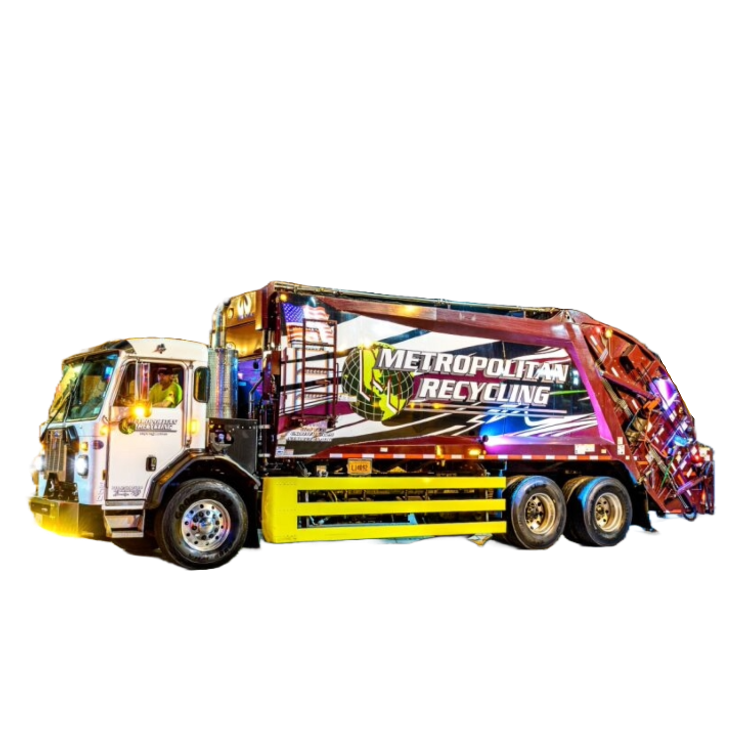
We are proud to be part of BIC’s list for nearly 20 years now. Metropolitan Recycling is one of the largest private waste removal companies in New York which offers a variety of collection and disposal services. 

Whether you are looking for waste removal, recycling, or organic recycling services, we have plenty of options to fit your needs and your budget. Apart from the non-hazardous solid waste, we collect plastic containers, glass containers, paper and cardboard products, and metal (tin, aluminum, steel) cans.

We are constantly investing in new recycling technologies like BIO-EZ – a food waste disposal system that transforms organic waste into nutrient-rich water by breaking down food scraps and even light paper items. 

Our mission is to facilitate our clients in their waste management while minimizing the environmental impact on our planet.


Need Assistance?
We’re Here To Help

Connect with an expert today.
Our team is ready to help you tackle your waste management challenges with customized solutions

Start Today

Translate »