718-257-8584

When a dumpster is emptied in Brooklyn, the waste does not simply vanish. A multi‑step process ensures it is transported, sorted, and ultimately sent to its final destination. Knowing this process helps property owners, contractors, and residents understand costs, timing, and environmental impacts.
In this article, we explain the storage, transfer, sorting, and final disposal steps. We also highlight typical endpoints, permitted materials, and regulatory or logistical constraints affecting Brooklyn waste flow.
From Dumpster to Transfer Station
Local Collection Trucks
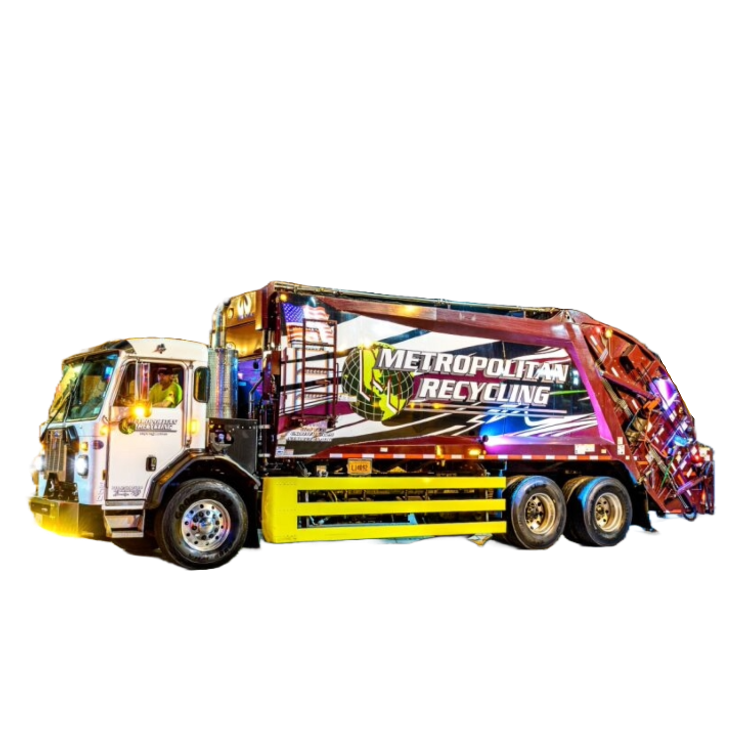
Dumpsters in Brooklyn are serviced by private haulers or city contractors. These collection trucks carry the waste from the bin location to local transfer stations or dumpsters’ drop off points.
Transfer Stations in Brooklyn
A transfer station is an intermediate facility where waste is accepted, sometimes sorted, compacted, and reloaded onto larger vehicles (trucks, rail, or barges) for long‑distance transport. Many Brooklyn dumpsters pass through one of these. For instance:
- Brooklyn’s 50th Street Transfer Station is one such facility handling waste from the borough.
- Court Street Transfer Station, also in Brooklyn, supports recycling and waste diversion for local collection.
- Atlas Roll‑Off’s Brooklyn transfer station is another local facility used by haulers. ● Varick I Transfer Station (in Brooklyn) accepts nonhazardous municipal solid waste.
At these stations, waste may be compacted, sorted, or temporarily held before onward shipment.
Sorting, Recycling & Material Recovery
Not every item in a dumpster is destined for landfill. Some materials are diverted for recycling or recovery:
- Recyclable materials (metal, cardboard, glass, plastics) are removed when possible.
- Brooklyn hosts the Sunset Park Material Recovery Facility, where recyclables are processed in bulk.
- Items that are unsuitable for reuse or recycling remain within the general waste stream.
This intermediate sorting helps reduce landfill burden and supports environmental goals.
From Transfer to Final Disposal
After waste is prepped at transfer stations, it travels to final disposal sites via expanded transport methods:
Marine Transfer & Rail Systems
- Some waste is loaded onto barges at marine transfer stations. These barges carry the waste across waterways, often to Staten Island terminals or rail yards.
- From those terminals, containers can be transferred to railcars to travel to regional landfills or waste processing facilities.
Landfills & Incinerators
- While New York City reduced reliance on local landfills, many waste loads are sent upstate or to permitted regional landfills.
- Some waste may be incinerated where allowed under environmental and regulatory standards.
- Historically, New York City’s municipal solid waste was routed through Fresh Kills (on Staten Island) in earlier eras, though that landfill is no longer active in that form.
Materials That Travel Versus Prohibited Waste
Permitted / Acceptable Materials
Typical dumpster loads in Brooklyn may include:
- Household trash (nonhazardous)
- Construction debris (wood, drywall, tile, plaster)
- Furniture and fixtures (nonhazardous)
- Yard refuse (branches, leaves, small wood debris)
- Metals, plastics, glass (if sortable)
These materials, when nonhazardous, flow through the standard pathway: dumpster → collection → transfer station → final disposal or recycling stream.
Prohibited or Restricted Materials
Certain materials cannot enter the general waste system:
- Hazardous chemicals, paints, solvents
- Refrigerants (from ACs or refrigerators) without special handling
- Asbestos
- Medical waste
- Batteries, electronic waste (in many cases)
- Explosives, flammables, compressed gas cylinders
These must be handled by specialized disposal or environmental services and may be taken to designated drop‑off sites like NYC’s Special Waste Drop‑Off sites.
Key Constraints, Regulations & Practical Issues
- Because Brooklyn has dense neighborhoods and limited street space, truck routing, access constraints, and time windows may affect how and when dumpsters are emptied.
- Permits are often required to place dumpsters in street or curb zones. These permits may impose limits on duration or placement which indirectly affect routing to transfer stations.
- Some transfer stations accept only nonhazardous municipal waste and reject prohibited items. (For example, Varick I Transfer Station does not accept hazardous waste.)
- For construction debris, some transfer stations or drop off points require that the hauler be registered or certified to handle C&D waste.
- Route and choice of final facility depend on capacity, cost, proximity, and environmental regulations.
Illustrative Flow Summary
- A hauler picks up your dumpster load in Brooklyn.
- The load is taken to a local transfer station (50th Street, Court Street, Atlas, Varick, etc.).
- At the transfer station, the load may be sorted, compacted, or partially diverted for recycling.
- From there, the waste is forwarded — often via barge or rail — to permitted landfills or incinerators outside the city.
- Recyclables are further processed at material recovery facilities like Sunset Park.